
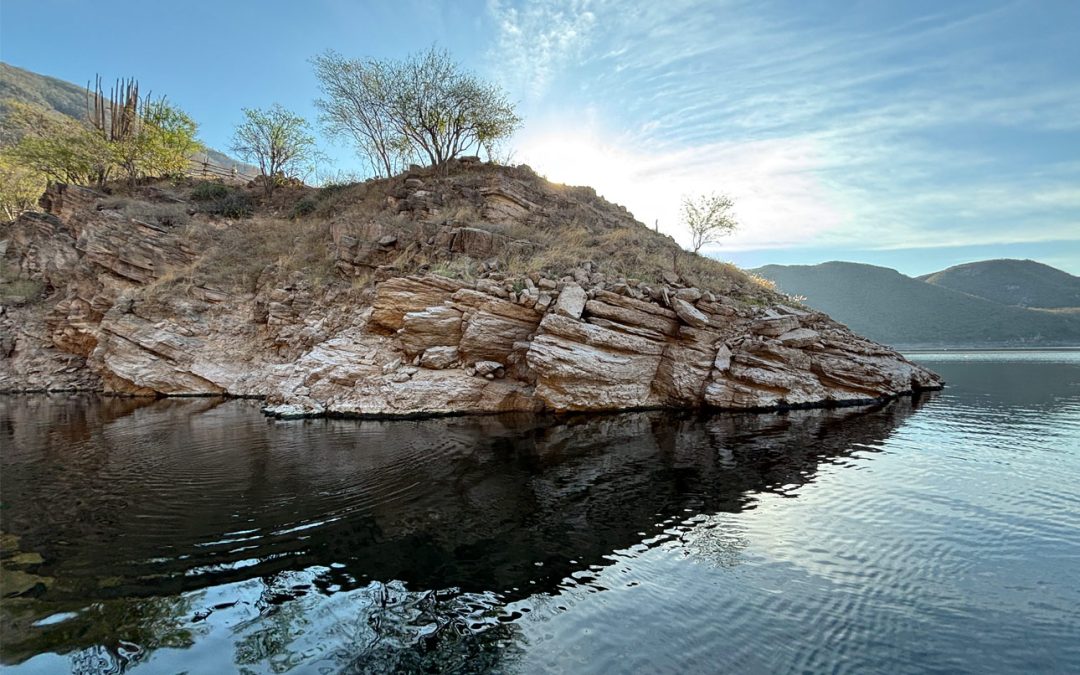
One afternoon, we were off to a slow start. We had run the boat a little farther down the lake to test new water. It looked fishy for sure, but we couldn’t get a bite when I accidentally hit the wall, forcing the bait to drop in the narrow lip of shade. That was the adjustment that kicked off a feeding frenzy. While Tony continued to throw parallel to the Aguamilpa rock face and come up empty, I started banking my bait into the wall, letting the impact kill its forward motion, and allowing it to fall tight against the rock. The bait dropped where the fish were holding tight, and I started winning cast after cast. That pattern carried the day.
The morning starts fast
A typical day on Aguamilpa begins before sunrise. The guides use headlamps to ready rods while guests finish coffee and munch on warm egg burritos. By the time the first light reaches the water, you want to be in position. When you have more than one man in the boat, your guide may want to test a wacky worm against a Chug Bug or Whopper Plopper to determine what the lake wants that morning. Some days, the bite stays on the surface. Other days, the fish slide just below it, and a weighted fluke or jerkbait becomes the better answer.
By midmorning, the sun is higher, the shallow bite begins to thin out, and the easy rhythm of first light changes. It’s time to give a crankbait or a watermelon lizard a try. Aguamilpa is capable of exceptional numbers, and not every productive pattern is a trophy pattern. Sometimes the right decision is to stay with steady fish. Sometimes it is best to leave them and slow down in heavier cover for a better bite.
The midday break is part of the fishing
When the sun is high and the shallow bite has slowed, the boats return to the lodge. Jose will greet you on the dock with cool towels for your neck and fishy fingers. The van awaits to carry you up the hill, where the chef has prepared a three-course lunch built around local cuisine. There is time to eat, cool off, repair tackle, and rest before the afternoon session.
The break is not time stolen from the day. It lines up with the least productive and most punishing hours on the water. By mid-afternoon, a breeze often begins to move across the lake, the light softens, and the bite starts building again.
The guides use that time, too. Your guide is busy relining a reel or checking with the other guides to see if another part of the lake is more productive. Some days we get back to the boat, and our guide has brought a secret stash of new baits.
Fish the afternoon differently
The afternoon is not always a repeat of the morning. Wind may make a jerkbait more useful. Shade may keep the rock-wall bite alive. A moving bait may begin producing again as the light gets longer, or the fish may force you to slow down around submerged timber and points.
The advantage is that you return rested enough to notice the change. Long days in the Mexican sun can make an angler stubborn, sloppy, and late to the next pattern. A cool towel, a real lunch, and an hour out of the heat can be worth more than another hour of casting at fish that have already moved.
That rhythm is one of the things first-time guests tend to understand only after they arrive. The lodge is not interrupting the fishing. The lake is setting the schedule.
What to remember when you find a wall
Do not assume the pattern will be the same on every wall or will last. The best stretch may be one short section where the shade is deeper, the drop is sharper, or the fish are grouped. Once a wall produces, make the cast again before leaving it.
Most of all, do not fight the day. Fish the early surface window, follow the fish down when the sun rises, come in when the lake goes quiet, and be ready when the afternoon begins to move again. Aguamilpa rewards anglers who adjust before the bite forces them to. That week, the adjustment was simple: stop throwing beside the wall, and start throwing into it.
Winter 2026-27 and spring 2027 dates are now booking. Check the latest Fish Tales report before you travel, and let the guides show you how the lake is fishing when you arrive.