
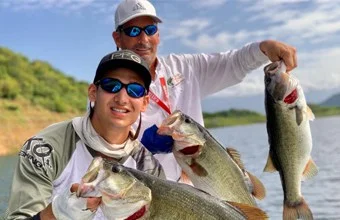
One hundred bass sounds like a number invented for an advertisement. On Lake Aguamilpa, it can be the point in the day when you stop counting.
The first ten fish feel important. You remember the bait, the bank, and who caught the first one. By thirty, the boat has settled into a rhythm. By fifty, soft plastics are torn, hooks need attention, and the guide has already rerigged something you were sure would last all week. Somewhere after that, the day stops feeling like a tally and starts feeling physical.
Your hands know before your head does
A high-volume day leaves evidence. Your thumb gets rough from lipping fish. Knuckles pick up small cuts from hooks, line, and gill plates. The rod handle feels different late in the afternoon because your hands are tired, and the hookset that looked sharp at sunrise becomes more economical by the last hour.
Terminal tackle becomes a consumable. Soft baits split. Treble hooks dull. Split rings open. A bait that catches one fish at home may catch enough bass at Aguamilpa to lose its paint, bend a hook, or disappear entirely before lunch.
What happens to the competition
Groups become competitive quickly, even when everyone claims they are not keeping score. Boat totals get compared at lunch. Someone begins measuring fish more generously. The angler who caught the first five reminds everyone about it after the other boat catches the next twenty.
That friendly pressure is part of why Aguamilpa works so well for groups. The lake gives everyone enough opportunities to recover from a slow start, learn a new bait, or win the afternoon after losing the morning.
The bigger bite changes the entire day
Numbers can make anglers casual until one fish stops the boat. The strike feels heavier, the fish stays down, and the guide’s voice changes. Suddenly, no one cares whether the count is eighty-six or ninety-two.
That is the tension inside an Aguamilpa day. Most bites keep the action moving. One may become the fish everyone talks about at dinner. The lake is known for volume, but the possibility of a heavy bass keeps every hookset from becoming routine.
Why the day still needs a break
By midday, the heat and the pace begin to rise. Boats return to the lodge, where a cool towel and a three-course lunch built around local cuisine are waiting. The break gives hands, shoulders, tackle, and attention time to reset.
An hour out of the sun can make the afternoon feel like a second fishing day rather than the exhausted end of the first. When the breeze returns and the bite wakes up, anglers are ready to begin counting again, even if they stopped writing the number down hours earlier.
The number is not the whole story
A hundred bass is impressive, but the reason guests remember the day is more specific: the bait that could not miss, the guide who kept it rigged, the fish that broke something, the boat that won lunch, and the heavy one that made everyone stop talking.
Winter 2026–27 and spring 2027 dates are now booking. Come prepared to catch enough fish that counting becomes the least interesting part.